Delta’s Biscoff cookies were supposed to be temporary
seriouseats.comThere are a few things I only get intentionally when traveling for work so it's something to look forward to and brings something positive to the trip.
You’re welcome. You just saved thousands of dollars.
>Myth: Smelling an allergen can trigger anaphylaxis.
>Fact: While people often don’t like the smell of a food they’re allergic to, smell does not provoke an allergic reaction...While smells can linger in the air, the allergen proteins do not, which is why smelling a food will not trigger anaphylaxis.
https://pubmed.ncbi.nlm.nih.gov/33548082/
>Allergic reactions to airborne peanut proteins are rare and cannot be predicted by high levels of IgE-antibodies to peanut or Ara h 2. Only small amounts of biologically active peanut proteins were detected in the air and seem unlikely to trigger moderate/severe allergic reactions.
Compared to natural peanut butter anyways. Compared to something like Jif though, that difference is probably minimal.
Biscoff spread is more like 40% fat, 35% sugar, and 20% other carbs. No protein or fiber.
I understand that this is a blazing hot culinary take and might be the most controversial thing I've written on HN. Before downvoting please consider that this isn't elitism or opinion - everybody the world over deserves the joy of flavor in their confections instead of cloying bland sweetness. Embrace variety and live your life. Throw your Biscoff in the trash and buy some Tim Tams or Thin Mints.
Those things have been enshittified to being brown dyed sweet biscuit your decrying and I hate that we (Australians) still talk them up.
But to be honest, as a Belgian living abroad, I'm just happy I can find it at all lol. Was surprised to even find the 'crunchy' spread in my local supermarket.
It's also funny how they deny that the original deal with Delta was only a temporary short term deal, but that it was always a longterm deal.
I never knew this was the reason. I had assumed that airlines stopped serving peanuts as an accomodation to the increasing number of people with peanut allergies.
https://www.aaaai.org/allergist-resources/ask-the-expert/ans...
> What can occur is that the patient smells an allergen, and that smell triggers a strong memory of a past reaction or the fear of having a reaction and signs and symptoms of panic may occur – including an increase in heart rate, tight breathing, flushing of the skin and nervousness, all of which could be mistaken as signs and symptoms of anaphylaxis. ... While smells can linger in the air, the allergen proteins do not, which is why smelling a food will not trigger anaphylaxis.
Interestingly some allergens like those in shellfish /can/ aerosolize in a boiling pot, however according to them peanuts cannot. I can still absolutely see airlines reacting to passengers thinking they're having attacks and eliminating peanut snacks out of caution and to avoid the issues even an imagined attack can cause on a flight. That and the risk of surface contamination probably?
https://www.aaaai.org/tools-for-the-public/conditions-librar...
edit: dang scooped by 5 minutes.
The vast majority of allergens, on the other hand, are proteins, with the very smallest proteins being on the order of 1 kiloDalton. Large proteins get up into hundreds to thousands of kDa.
He's pretty anxious about food in general, so it actually made a lot of sense.
No it's not. We know for a fact this is not true.
Here's an interesting story (but you can also find ample published literature on it, or even just like... think about how brains work): https://tomstafford.substack.com/p/reasonably-emotional
https://en.wikipedia.org/wiki/Phineas_Gage#Somatic_marker_hy...
Second having brain damage and being incapable of processing emotion, doesn't mean that the rest of the brain hasn't been affected. In other words, a brain with an inability to process emotion, may also have an inability to process logical thought outcomes unrelated to the loss of emotional processing.
But look... the brain is complex. It's not some sort of pre-planned construct, as I'm sure you know it's an evolved organ, layered, complex. For example, memory imprint seems to be heavily impacted by emotion. Note that I'm not saying "only formed by", but impacted.
It's why you get PTSD, and it makes sense. Think mouse set upon by cat, the mouse naturally was exceptionally fearful, panicking, adrenaline, and it's very important that the mouse associates any reference to 'cat' with 'fear' and 'apprehension'. So the concept that emotion can fix survival important memories into memory, is seemingly a sensible one.
Yet for all of this, we can lay down knowledge and retain it without a cat standing over our shoulder. Realistically, we have multiple decision making processes, and ways to store memory, and so on, running in parallel.
Parallel also doesn't mean, by the way, that one cannot be affected by the other. You can use one decision making process to affect another. You can quell emotional response with reason, and emotional response can quell logical thought. Again, complex.
Effectively, what I'm saying here is that this is a complex topic. And that I'm sticking with my rendition, whilst explaining that 'parallel' doesn't imply 'isolated'.
By the way, fun 30 minute dive into that book/author/articles, thanks for the link.
All considering for the person affected (and my desire to not end up at an alternate airport for hours/overnight) has always seemed like an easy thing to do.
> I can still absolutely see airlines reacting to passengers thinking ...
That, plus a dozen other scenarios which airlines do not want paying out in their airplanes. Or even post-flight, if some lawyer wanted to argue that the fatal peanut fell into mommy's purse during her flight back home to her family.
She visited a friend's house and started getting an itchy throat immediately. Friends knew of her allergy and obviously hadn't prepared any.
Turned out the dog food had peas in it and the bag was open on the other end of the house in the kitchen. (And a supporting role from whatever the dog had slobbered on in the living room)
Sometimes it blows me away how sensitive our bodies can be.
Yes, but consider that we're all descended from people who survived diseases like smallpox. Repeatedly.
And how few nanograms of smallpox virus are needed for LD50, to weed out the insensitive immune systems.
Then a Costco pack should be close to a lifetime supply.
Dino nuggies are worth it though…
My friends and I stumbled into this as it's own food category and I wish I could remember the stranger ones.
Apparently, they are a brand of speculoos cookies, and this Wikipedia synopsis is eye opening:
> speculaas [speːkyˈlaːs] ⓘ refers to the more traditional variant, made with a mix of various spices, which is nowadays most popular in the Netherlands; speculoos [speːkyˈloːs] ⓘ refers to a Belgian variant that omits the traditional spices in favour of caramelized sugar for flavour, and which is nowadays the most common variant in Belgium and worldwide
So the Belgians enshittified speculaas to create speculoos, pumping it full of sugar, and presented it to the world as something special.
Looking at the nutritional profile of cookies doesn't make sense. You're supposed to eat them in such low quantity/frequency that it doesn't matter.
And sugar is special because it's essentially a drug that our brains are programmed to seek out and eat more of.
Yes and no. This "Speculoos is actually cheap Speculaas" isn't completely true. That's what people like to say today, but the "Speculoos" name has been around much longer than Lotus bakeries. It's just a dialect thing and there is no reason. Some people called it "Speculaas", some people called it "Speculoos", and _then_ a cheaper variant got made and they choose the "Speculoos" term for it.
It all just sounds really fitting because the "-loos" suffix in Dutch means "without".
Kind of cool to the explosion of popularity and them taking advantage and partnering with other brands to expand their markets.
The bakery has been around since 1932, FYI.
[1] Off label for weight loss. My insurance wouldn't cover GLP-1s, and metformin is out of patent and super cheap, and I read that at least some people have had good success using it for weight loss. I am fortunately one of those happy few.
Maybe there’s some way to de-program such strong associations but seems like a way to kick a bad habit..
I got very sick fairly shortly after eating a bunch of strawberry ice cream when I was a kid. 25 years later and I still can't stand the stuff.
I've found when I take metformin, and then eat food later, I enjoy the food so much more as a craving/satiation thing. Especially steaks. But I'm not quite sure why that is. I can't say that what peers have told me about metformin is to help with weight loss, but supposedly the benefits/effects on the body are generally positive.
Out of curiosity, does that effect subside fairly quickly e.g. once the drug half life and has exited your system, do you crave/can you eat chicken fairly comfortably?
Like most countries I'd wager, we have plenty of own local biscuit brands you've never heard of. Biscoff does not stand out from them as fundamentally different in either texture or taste. I just couldn't wrap my mind around why this bland brand was suddenly pushed so heavily everywhere.
But if food executives think it's GLP resistant (whether it is or not) then it makes a lot of sense. Jesus. People should worry less about "hyperprocessed food" and more about things like this (alternatively, this sort of thing is one of the hyperprocessed foods people should actually worry about).
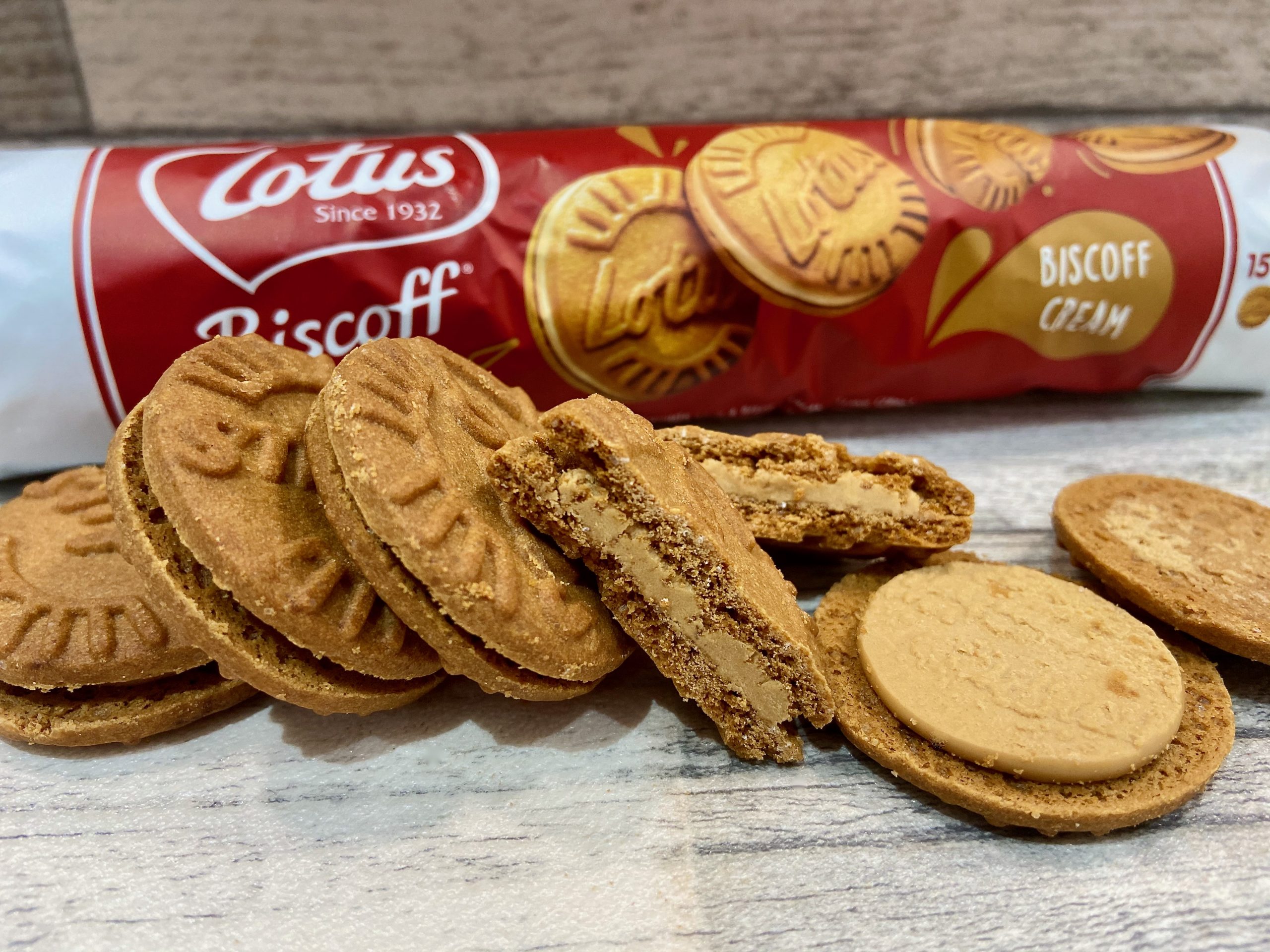
It's like eating a cinnamon-y, ginger-y oreo.
When I was young and shameless back then I would even ask for an extra one! My wife hates the cookie though, so probably in your boat
Pardon? You mean the traditional Belgian, Dutch, French, and German cookie? Because it's a cross-border (food) cultural good, it's not something invented by, or to this day cherished in, one specific country.
More seriously, the biscoff variant is quite distinctively Belgian, as it's using caramel rather than a traditional mix of spices.
I don't look at the nutrition facts
So, you can call yourself a nutritionist, run a blog about it, write a book about it, anything really, and tell anyone any kind of bullshit you make up.
I think I'm on pretty solid ground with mine though.
> I have been known to inhale entire costco sized sleeves of biscoffs > I don't look at the nutrition facts
Here's the title:
"What You're Eating Is Probably Pretty Much Fine"
The strapline is "maybe just not so much, and don't do it all the time"
This is meant to be good natured pedantry, but look it up, you may find it interesting.
How do you make your unknown product known?
You put it in front of as many people as you can!
In the above case, cookies in front of airline-passengers seemed to be the winning business formula, but this is only one example of a product meeting a market at a specific interface/connection point, with the Delta customers' drop-down in-flight tray tables being that "connection point".
In the study of business, this is one example (or subcase) of that much broader pattern...
Still, it's a pretty cool example! :-)
I know the cookie mainly for being sold at Costco. I had no idea they were given out on flights.
The biggest question I've always had about them was whether the "Lotus" in their name is the same brand as the Chinese supermarket chain Lotus. I think it isn't?
https://www.gva.be/regio/antwerpen/rivierenland/bornem/vlaan...
Hope they get rid of these, it's always a hard pass for me, and I've seen so many others just skip or bin them after one bit.
They apparently had enough getting stale to offload them to a liquidator.
I think they meant to say "cinnamon", biscoff do not contain ginger